Permian traffic
Oilfield and Energy Truck Crashes in the Concho Valley
Water haulers, sand trucks and crew pickups bound for the Permian Basin share narrow highways with everyone else. Here is what makes these crashes different.
In this guide
Head west or northwest from San Angelo and the traffic changes. On US-67 toward Big Lake, US-87 toward Sterling City and Big Spring, and SH-208 toward Robert Lee, you share the road with energy industry vehicles of every size. Many are driven by careful professionals. But the pace of oilfield work, the size of the equipment and the long two-lane roads create hazards that ordinary commuters rarely face.
This page covers crashes involving oilfield and energy vehicles, whether you were a local driver, a traveler, or a worker hurt on the job. It is general information, not legal advice.
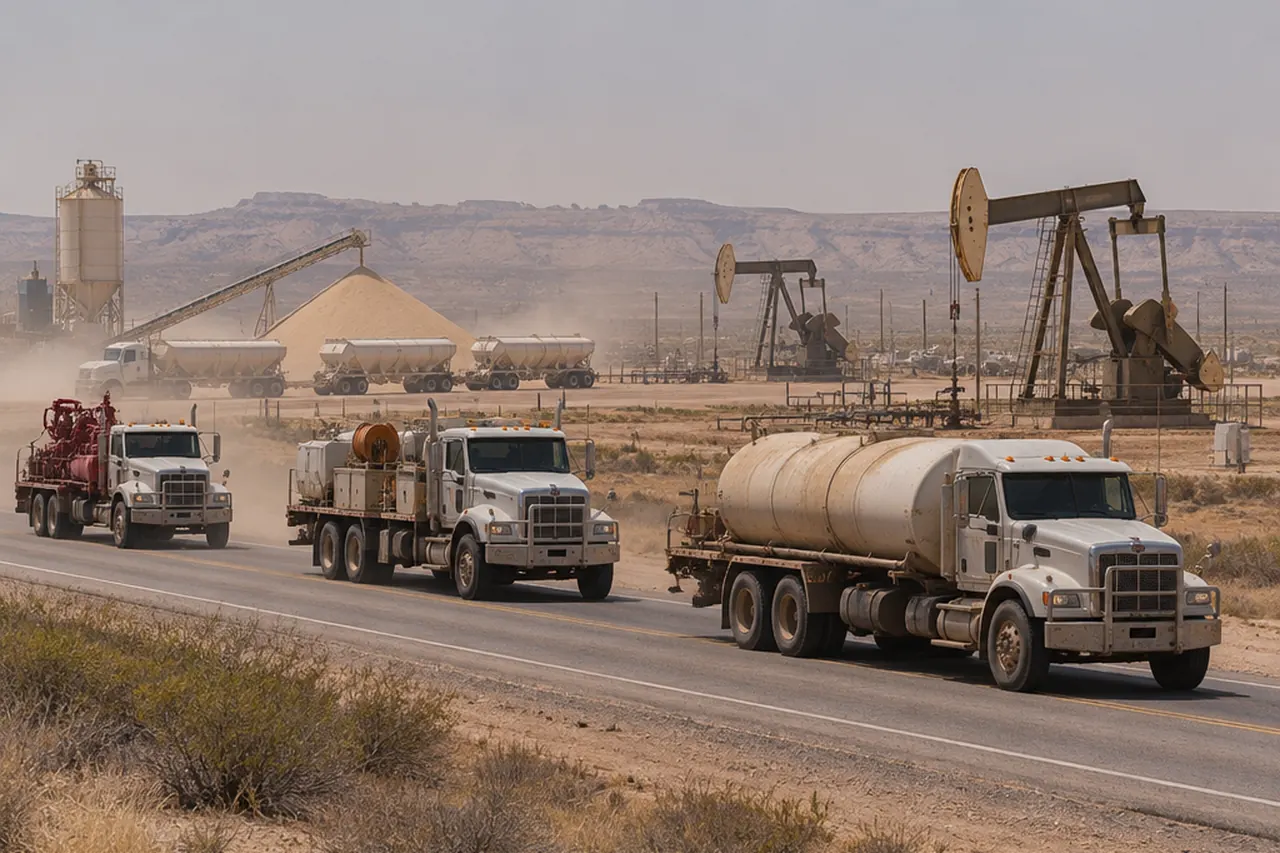
The Trucks You Meet on the Way to the Patch
- Water and fluid haulers moving fresh water or produced water between sites.
- Sand and aggregate trucks supplying well completion work.
- Oversize loads carrying rigs, tanks and pipe, sometimes with escort vehicles.
- Fuel and chemical tankers.
- Crew pickups and service trucks carrying workers between motels, yards and well sites, often at the start or end of a long shift.
What Makes These Crashes Happen
Long shifts and early starts
Energy work often means long days and odd hours. A tired driver at 4 a.m. on an empty highway is a recipe for drifting across the center line. Federal hours of service rules cover many commercial drivers, but some oilfield operations have special exceptions, so those cases call for close attention to what rules actually applied.
Turning in and out of lease roads
Heavy trucks slowly pulling onto a highway where traffic is moving at full speed from a caliche lease road, or braking to turn off one, can surprise drivers behind or approaching them. Mud and gravel tracked onto the pavement add to the problem.
Passing on two-lane roads
Slow, heavy loads tempt drivers behind them to pass, sometimes on hills or curves where they cannot see oncoming traffic. Head-on and sideswipe crashes are among the most serious on these roads.
Wildlife, weather and darkness
Deer are common on Concho Valley highways at dawn and dusk. Blowing dust, sudden storms and dark rural stretches without lighting cut reaction time for everyone, and a loaded truck needs much more room to stop.
Loads and equipment
Unsecured pipe, overfilled tanks or a trailer with worn brakes can turn a near miss into a crash.
Untangling Who Is Responsible
The energy industry runs on contractors. One well site may involve an operator, a drilling contractor, a trucking subcontractor and several service companies. The truck that hit you may be owned by one company, leased to another and driven by an employee of a third. Possible responsible parties include:
- The driver.
- The driver's employer, which is often responsible for crashes on the job.
- The company that owned or leased the truck.
- A company that loaded the cargo or maintained the vehicle.
Figuring out which company was really in charge often takes contracts, dispatch records and logs. Texas divides fault by percentage, and your recovery shrinks by any share assigned to you, so that investigation matters. For more on commercial truck claims generally, see our truck accident page.
If You Were Working When You Got Hurt
Many people hurt in oilfield crashes were on the clock: riding in a crew truck, driving a company vehicle, or hit while working near the road. That changes the picture.
- If your employer carries workers' compensation, you can usually get medical and wage benefits through that system regardless of fault. A workers' comp claim generally limits what you can recover from your own employer, but you may still have a claim against a different company whose driver caused the crash.
- If your employer is a non-subscriber, meaning it chose not to carry workers' comp, which Texas allows for private employers, you may be able to bring an injury claim directly against the employer. Non-subscriber cases have their own rules.
Report the injury to your employer right away and in writing. Be wary of being asked to sign anything about benefits or a waiver soon after a crash. Our article on going back to work after a car accident may also help.
Preserving Evidence in Remote Areas
Crashes on rural highways are often investigated by Texas DPS troopers or a county sheriff's office. Witnesses may be few, and the closest business with a camera may be miles away. If you can:
- Photograph company names, unit numbers, USDOT numbers and plates on every vehicle.
- Note mile markers, lease road signs or nearby landmarks.
- Get contact details for anyone who stopped, including other workers.
- Request the crash report once it is available, as described in our crash report guide.
Energy companies often track their fleets with GPS and in-cab systems. That data may be overwritten unless someone asks for it to be preserved.
Medical Care Far From Town
A crash near Big Lake may bring you first to Reagan Memorial Hospital, with a transfer to a larger hospital if needed. Others may be taken to the nearest regional hospital, or to Shannon Medical Center or San Angelo Community Medical Center. Keep records from every stop along the way. Our injuries guide explains why complete records matter.
Talking It Through With an Attorney
Oilfield crash claims can involve several companies, several insurers and questions about workers' comp. The general two-year Texas deadline still applies, but evidence can be lost far sooner. An independent attorney can help sort out who may be responsible. Request a free case review or call (325) 292-0499.
Sources
Questions people ask
Can I sue my employer after an oilfield crash in Texas?
It depends on whether your employer carries workers' compensation. If it does, workers' comp is usually your main remedy against that employer. If it is a non-subscriber, you may be able to bring an injury claim against it. Claims against other companies may be possible either way.
Who investigates crashes on rural highways west of San Angelo?
Usually Texas DPS troopers or the county sheriff's office, depending on the location. You can generally buy the crash report through TxDOT's online system once it is filed.
Do federal trucking rules apply to oilfield trucks?
Many commercial trucks fall under federal safety rules, but some oilfield operations have special exceptions, including in hours of service. Which rules applied depends on the vehicle, the company and the trip.
Keep reading


Free · about a minute
Find out if you have a case
Answer five quick questions and an independent San Angelo-area injury attorney's office will review your crash at no cost.
Prefer to talk? Call (325) 292-0499