Walkers and cyclists
Hit While Walking or Riding a Bike in San Angelo
People on foot or on a bicycle have almost no protection in a crash. Texas law gives them rights on the road, and some coverage may help even if you do not own a car.
In this guide
San Angelo has more people on foot and on bikes than you might expect for a West Texas city. Students walk and ride around Angelo State University and College Hills Boulevard. Joggers and cyclists use the trails along the Concho River downtown. Airmen from Goodfellow Air Force Base, workers walking to bus stops and kids heading to school all cross busy roads like Sherwood Way, Bryant Boulevard and Chadbourne Street. When a car hits a person, the injuries are often serious.
This page explains the rules that protect walkers and cyclists, the coverage that may help, and what to do after a crash. It is general information, not legal advice.
Who Has the Right of Way
Pedestrians in crosswalks
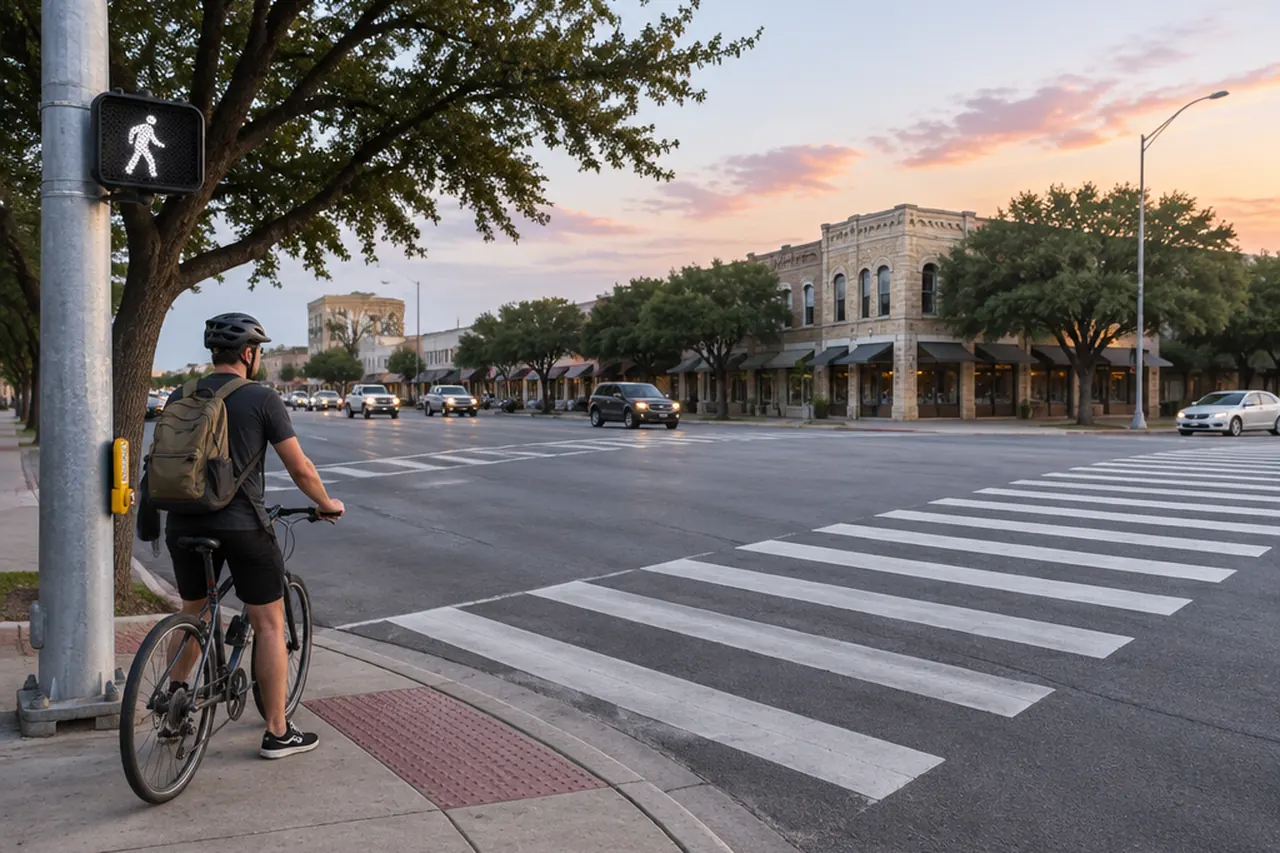
Texas law generally requires a driver to yield to a pedestrian crossing in a crosswalk when there is no traffic signal controlling the crossing, or when the signal is not working. A crosswalk can be marked with paint, but an unmarked crosswalk can also exist at many intersections.
Where signals control the crossing
At intersections with walk signals, pedestrians generally must follow them, and drivers turning on a green light must still watch for people crossing legally.
Crossing away from a crosswalk
Someone crossing mid-block generally must yield to vehicles. That does not give drivers permission to hit them. Drivers still must take care to avoid people in the road, especially children and people who are clearly confused or impaired.
Cyclists
In Texas, a person riding a bicycle generally has the same rights and duties as a driver of a vehicle. Cyclists are expected to ride with traffic, obey signals and use lights at night. Drivers are expected to give them room, check before turning, and look before opening a door into the street.
How These Crashes Usually Happen
- A driver turning right on red who looks left for cars and never sees someone stepping off the curb on the right.
- A driver turning left who is watching for oncoming traffic, not people in the crosswalk.
- Backing out of a parking space or driveway in a shopping center or apartment lot.
- Passing too close to a cyclist on a road with no shoulder.
- A driver distracted by a phone. Texas bans texting while driving.
- Poor lighting at night, which is a problem on many roads at the edge of town.
When the Driver Blames You
Drivers and insurers often say the pedestrian darted out or the cyclist came out of nowhere. Under Texas modified comparative fault, your recovery is reduced by any share of fault assigned to you and is generally barred if that share is more than 50 percent. That makes evidence important:
- Photos of the crosswalk, signals, lighting and where you were struck.
- Your clothing, shoes, bike and helmet, kept as they are.
- Witness names. People at bus stops and in nearby businesses often see these crashes.
- Camera locations on stores, homes and traffic poles, since footage may be recorded over quickly.
Our Texas car accident laws guide explains the fault rule in more detail.
Coverage That May Help, Even Without a Car
Many people assume they have no insurance options if they were walking or biking. That is often not true:
- The driver's liability insurance is the main source when the driver was at fault.
- Your own auto policy, or a policy covering a relative you live with, may include personal injury protection and uninsured motorist coverage that apply when you are hit as a pedestrian or cyclist. Texas insurers must include PIP and offer UM coverage unless rejected in writing.
- Health insurance may pay medical bills and seek repayment later.
If the driver drove away, see our hit-and-run page. Our insurance claims guide explains how these policies fit together.
What to Do After Being Hit
- Call 911. Inside the city, SAPD usually responds. Get medical care even if you think you are okay.
- Get the driver's name, plate and insurance. If you cannot, ask a bystander to help.
- Photograph the scene and your injuries if you are able.
- Keep damaged clothing, your bike and your helmet.
- Request the crash report. Our crash report guide explains how.
- Do not give a recorded statement to the driver's insurer before you understand your injuries.
Injuries and Recovery
Pedestrians and cyclists often suffer head injuries, broken legs and hips, shoulder injuries and serious cuts. Older adults and children face special risks. Treatment usually starts at Shannon Medical Center or San Angelo Community Medical Center. Keep records of every visit and follow your doctor's plan. Our injuries guide explains why that matters.
When the Person Hit Is a Child or an Older Adult
Children are small, hard for drivers to see, and do not always judge traffic well. Drivers are expected to use extra care around schools, parks and neighborhoods where kids are likely to be. A claim for a hurt child is usually handled by a parent, and any settlement for a minor may need a court's approval before it is final. Texas law also generally pauses the lawsuit deadline for a child until they turn 18, but evidence does not wait, so acting early still matters.
Older adults often suffer more serious injuries from the same impact, such as hip fractures and head injuries, and may need longer recovery or help at home. Medicare may have paid for treatment and may need to be repaid from a settlement. Keep track of every new cost, including in-home help and changes to the home.
Notes for Students and Service Members
Angelo State students may be covered under a parent's auto policy even when they do not have a car in San Angelo, so check with family. Service members at Goodfellow may have legal protections if a case conflicts with active duty. See our article for college students hurt in a crash.
Help Sorting Out Your Options
If you were hit while walking or biking, an independent attorney can help you understand who may be responsible and what coverage may apply. Start with a free case review or call (325) 292-0499.
Sources
- Texas Transportation Code, ch. 552 — pedestrians
- Texas Transportation Code, ch. 545 — operation and movement of vehicles
- Texas Civil Practice & Remedies Code, ch. 33 — proportionate responsibility
- Texas Insurance Code, ch. 1952 — PIP and UM/UIM coverage
- 50 U.S.C. ch. 50 — Servicemembers Civil Relief Act
Questions people ask
Do drivers have to stop for pedestrians in crosswalks in Texas?
Texas generally requires drivers to yield to pedestrians in a crosswalk when no traffic signal is controlling the crossing. Where there are walk signals, both drivers and pedestrians must follow them.
Can my car insurance pay if I was hit while walking?
Often, yes. Personal injury protection and uninsured motorist coverage on your own policy, or a policy of a relative you live with, may apply when you are struck as a pedestrian or cyclist. Check the policy terms.
Do cyclists have the same rights as cars in Texas?
Generally yes. A person riding a bicycle has the same rights and duties as a vehicle driver, with some rules specific to bikes, such as using lights at night.
Keep reading
Free · about a minute
Find out if you have a case
Answer five quick questions and an independent San Angelo-area injury attorney's office will review your crash at no cost.
Prefer to talk? Call (325) 292-0499