Storm Season
Flash Floods, Low-Water Crossings and Your Car Claim
A dry creek bed can become a moving river in under an hour after a West Texas downpour. Here is what to know about water on the road, insurance for a flooded car, and fault when storms are part of the story.
In this guide
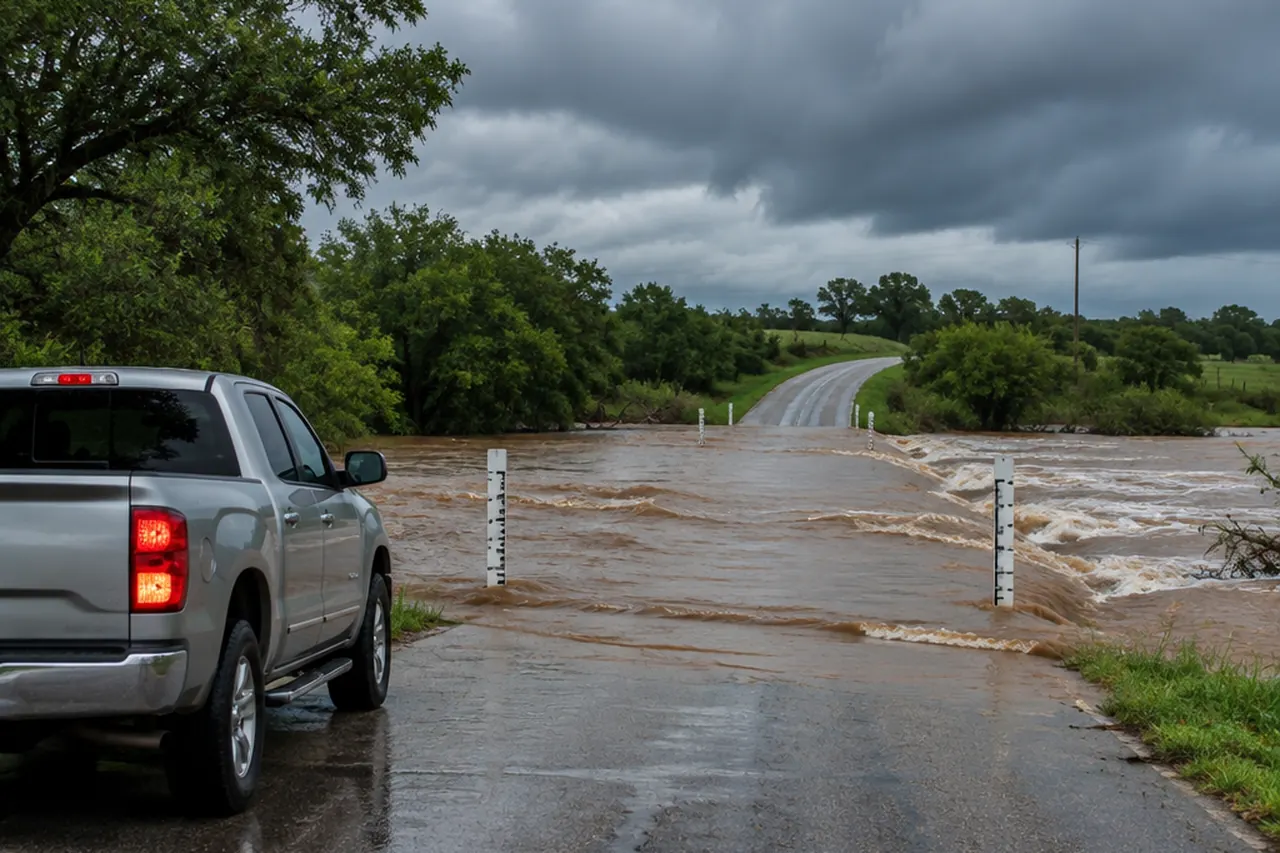
The Concho Valley can go months without serious rain and then get several inches in an afternoon. When that happens, low-water crossings on county roads and draws across ranch land fill quickly. Water rises on city streets too. Drivers who grew up here know the warning signs. Newcomers, students and families stationed at Goodfellow sometimes learn the hard way.
Why moving water is so dangerous
TxDOT and the National Weather Service repeat one message every storm season: Turn Around, Don't Drown. The reason is simple physics. Moving water pushes hard against the side of a vehicle, and once tires lose grip on the road, the car can float. Water also hides what is under it. A crossing that looks a foot deep may have lost its pavement entirely.
Some practical habits:
- Never drive around a barricade or a "road closed" sign.
- Do not trust a depth marker you cannot clearly read.
- Be extra careful at night, when you cannot judge depth or current.
- If your car stalls in rising water and it is safe to get out, get out and move to higher ground.
Insurance for a flood-damaged car
Water damage to your vehicle is generally a comprehensive loss in a standard Texas auto policy. That is true whether the car was parked in a flooded lot or stalled in a crossing. Liability insurance alone, the minimum Texas requires, does not cover your own vehicle.
A few things tend to come up on flood claims:
- Total loss is common. Water in the engine, electronics or interior often makes repair uneconomical. The insurer generally owes the actual cash value of the car, minus your deductible.
- Do not try to start a flooded engine. Cranking it can turn a repairable problem into a destroyed engine, and an insurer may question the added damage.
- Document fast. Photograph the water line inside the car and outside before anything is moved.
- Your own insurer owes you timely handling. Texas prompt-payment rules set deadlines for insurers on first-party claims. The insurance claims guide walks through the process.
If you were injured, your PIP coverage generally applies regardless of fault. Our post on Texas PIP coverage explains what it pays, and the car accident injuries guide covers symptoms to watch for after a hard stop in the water.
When a storm crash is still someone's fault
Insurance adjusters sometimes treat bad weather as if it erases responsibility. It does not. Texas drivers are expected to adjust to conditions. A driver who keeps the same speed on a flooded street, follows too closely in heavy rain, or hydroplanes across the center line may still be at fault for the crash that follows.
Some examples where fault may still land on another person:
- A pickup going too fast for the rain loses control on the Houston Harte Expressway and spins into your lane.
- A driver ahead of you on Loop 306 brakes late for standing water, and a third car slams into the back of you both.
- Someone drives into a closed crossing, stalls, and you hit their car in the dark with no lights on.
- A commercial truck driver pushes on through a storm to stay on schedule.
Texas uses modified comparative fault. If both drivers made mistakes, each one's share is weighed, and a person more than 50% responsible cannot recover. The insurer for the other driver may argue that you should have stayed home. Facts like speed, following distance and where each car was matter more than the weather itself. Our rear-end collision page explains how following distance plays in.
What about the road itself?
People sometimes ask whether the county or the state is responsible for a crossing that floods. Claims against government bodies run under the Texas Tort Claims Act. That law has short notice deadlines, often six months for a written notice, and limits on what can be recovered. These cases are difficult and depend heavily on specific facts. If you think a road defect played a role, talk to an attorney early so the deadline does not pass.
After the storm: building your record
Weather crashes are easier to explain when you have the details on paper:
- Note the time and location as precisely as you can.
- Save weather alerts on your phone and screenshots of radar if you have them.
- Get the crash report. See our page on getting a San Angelo crash report.
- Write down what you saw: water depth, signs, lights, the other car's speed.
- See a doctor and keep every bill.
If another driver's choices turned bad weather into a serious crash, call (325) 292-0499 for a free review with an independent Texas injury attorney.
Sources
- Texas Civil Practice & Remedies Code, ch. 33 — proportionate responsibility
- Texas Transportation Code, ch. 545 — operation and movement of vehicles
- Texas Insurance Code, ch. 542 — prompt payment of claims
- Texas Civil Practice & Remedies Code, ch. 101 — Texas Tort Claims Act
- Texas Insurance Code, ch. 1952 — PIP and UM/UIM coverage
Questions people ask
Does car insurance cover flood damage in Texas?
Flood damage to your own vehicle is generally covered under comprehensive coverage, which is optional. Liability-only policies usually do not pay for your own car.
If I drove into a flooded crossing, can I still file a claim?
For damage to your own car, comprehensive often still applies, though every policy has its own terms. Read your policy and ask your insurer in writing if you are unsure.
Can another driver be at fault if it was raining?
Yes. Rain does not excuse unsafe driving. Drivers must adjust speed and following distance to conditions, and fault is weighed under Texas comparative fault rules.
Keep reading
Free · about a minute
Find out if you have a case
Answer five quick questions and an independent San Angelo-area injury attorney's office will review your crash at no cost.
Prefer to talk? Call (325) 292-0499