After the Crash
No Police Report After Your Crash? Here Is What to Do
Plenty of crashes end with two drivers swapping phone numbers in a parking lot. If you later realize you are hurt, a missing police report is a hurdle, not a dead end.
In this guide
Maybe it was a fender bender in a busy parking lot. Maybe the other driver seemed nice and suggested you "keep insurance out of it." Maybe you called and no officer came because nobody seemed hurt. Days later, your neck is stiff and the other driver has stopped answering. Without a police report, where do you stand?
When Texas law calls for a report
Texas law requires drivers to stop, exchange information and render reasonable help when needed. It also requires drivers to immediately report a crash to police when it results in:
- Injury to or death of a person, or
- Damage that leaves a vehicle unable to be driven normally.
Separately, an officer who investigates a crash involving injury, death or at least $1,000 in property damage must file a written report. Inside city limits that is usually the San Angelo Police Department. Outside the city it is the Tom Green County Sheriff's Office or Texas DPS.
A small parking lot bump with no injuries may not trigger these rules. But injuries that show up later can mean the crash was more serious than it seemed. Our what to do after a car accident guide covers the scene duties.
If you realize later that you are hurt
- See a doctor now. The sooner symptoms are recorded, the easier it is to connect them to the crash.
- Contact the police department or sheriff's office for where the crash happened and ask what they can do now. Policies vary, and they may or may not take a report after the fact. Write down who you spoke with and what they said.
- Notify your own insurer. Your policy likely requires prompt notice, and your PIP and uninsured motorist coverage may matter here.
- Report to the other driver's insurer if you have their information, with just the basic facts.
If you are not sure whether a report exists, check. Sometimes an officer filed one that the drivers never saw. See how to request a San Angelo crash report.
Build the record the report would have made
A police report is useful because it pins down who, what, when and where. You can rebuild much of that yourself:
- Write it down today. Date, time, location, direction of travel, weather, what each car was doing, and anything the other driver said.
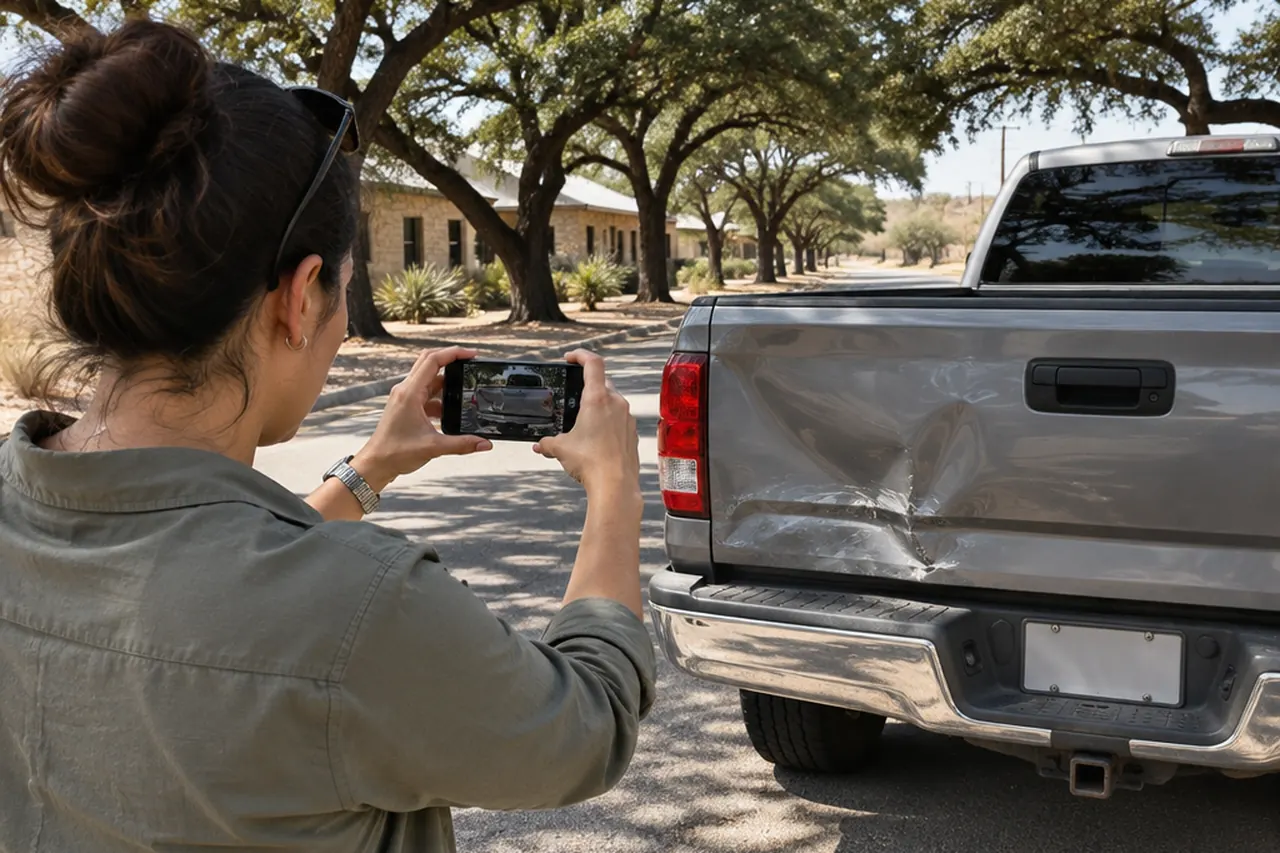
- Save photos and texts. Photos of the damage, both cars, the lot or intersection, and any messages with the other driver.
- Look for video. Businesses, apartment complexes and homes often have cameras. Footage is often recorded over in days, so ask quickly.
- Find witnesses. A store employee or passenger may remember more than you think.
- Get repair estimates that show where and how hard the cars were hit.
- Keep medical records that note you were in a vehicle crash.
Claims can still move forward
A police report is evidence, not a requirement for a claim. Insurers handle crashes without reports all the time. They will look at statements, photos, damage patterns and medical records instead. Fault is still decided under Texas comparative fault rules, and the two-year lawsuit deadline still applies.
What changes is how much the other side can dispute. Without a neutral officer's account, the other driver may tell a different story, or deny the crash happened at all. That is why the steps above matter.
The trouble with handshake deals
Agreeing to settle privately can seem simpler, but it often goes wrong:
- The other driver may stop paying or deny the deal.
- Repair costs are often higher than anyone guessed at the scene.
- Injuries may appear later, and a private payment may not cover them.
- Your policy may require you to report the crash anyway.
If the other driver drove off without exchanging information, treat it as a possible hit-and-run and report it to police. See uninsured and hit-and-run crashes.
Get help sorting it out
Your own insurer will also want to hear from you, and they may ask for a statement. Before you talk to either company, read our post on recorded statements and the insurance claims guide. Keep your account the same each time you tell it, and stick to what you actually saw.
A crash without a report can still be a valid claim, but it usually needs more work to prove. For a free review with an independent Texas injury attorney, call (325) 292-0499.
Sources
Questions people ask
Can I file an insurance claim without a police report in Texas?
Yes. A police report is helpful evidence but is not required to make a claim. Photos, witness information, repair estimates and medical records can help fill the gap.
Is it too late to report a crash to police a few days later?
It depends on the agency. Contact the police department or sheriff's office where the crash happened, ask what they can do, and note who you spoke with.
The other driver now denies the crash happened. What can I do?
Gather everything that shows the crash occurred: photos, texts, damage, witnesses and any video. An attorney can help preserve and present that evidence.
Keep reading

Free · about a minute
Find out if you have a case
Answer five quick questions and an independent San Angelo-area injury attorney's office will review your crash at no cost.
Prefer to talk? Call (325) 292-0499