Low-Speed Crashes
Parking Lot Crashes: Fault, Police and Cameras
Parking lot crashes happen at walking speed, but the arguments afterward can move a lot faster. Here is how fault is usually sorted out on private property and what to gather before you drive away.
In this guide
Saturday at a big-box store on Sherwood Way, a lunch rush at a drive-through on Sunset Drive, game day near the Angelo State campus: crowded lots mean cars backing out blind, drivers cutting across empty rows and people hunting for a space instead of watching the car ahead. Most of these crashes are fender-benders. Some are not, especially when a pedestrian or a child is involved.
Lots are different from public streets in a few ways that catch people off guard. This post walks through them.
Thoroughfares versus parking rows
Most lots have two kinds of driving space. The wide lanes that run along the storefronts or out to the main road act like little streets; insurers often call them thoroughfares. The narrow aisles between rows of spaces are feeder lanes. As a rough rule, a car on a feeder lane is expected to yield before pulling into a thoroughfare, much like a side street meeting a main road.
Stop signs, painted arrows and yield markings inside a lot carry real weight. Even if a police officer cannot write a ticket for ignoring them on private property, an adjuster will treat ignoring them as careless driving.
Common patterns and how blame tends to fall
- One car backing, one car moving forward. The backing driver usually carries most of the fault, because they are expected to wait until the path is clear.
- Both cars backing out at once. Two drivers reversing into each other often end up splitting the blame.
- Pulling out of a space into a moving car. The car leaving the space is generally expected to yield to traffic already in the lane.
- Cutting diagonally across empty spaces. A driver who ignores the lanes entirely is hard to defend.
- Two cars racing for one spot. Fault depends on who was where, which is why photos matter.
- A parked, empty car. If you were parked and away from your car, the moving driver is almost always at fault.
Texas follows modified comparative fault, so a parking lot crash can be split 70/30 or 50/50, and a driver found more than half to blame generally collects nothing from the other driver.
Will the police come to a private lot?
Call if anyone is hurt or a car cannot be driven. Texas law requires a report to police in those situations. San Angelo police may respond to a lot inside the city; outside the city it may be the sheriff's office.
What changes on private property is the paperwork. Officers often do not prepare a full state crash report for a minor collision in a store lot with no injuries. They may give you a short information exchange form or nothing at all. That is not a reason to skip the call, but it does mean you should build your own record. Our post on a crash without a police report goes deeper.
If someone hits your empty car and leaves without leaving a note, or drives off after hitting you, tell police anyway. Texas law requires a driver who hits an unattended vehicle to stop and either find the owner or leave a written note with their name and address. A driver who flees may be covered under our page on uninsured and hit-and-run crashes.
Store cameras: ask the same day
Retailers, banks and restaurants often have cameras that cover their lots. That video can end the argument in seconds. The catch is time: many systems record over old footage after a few days or a couple of weeks.
- Go inside and ask for the manager before you leave, or call later that day.
- Give the exact time, the row and a description of both cars.
- Ask them to save the clip. Many businesses will not hand it to you directly but will preserve it for police, an insurer or an attorney.
- Follow up in writing with an email or a letter that names the date, time and location.
Look around for other cameras too: a car with a dash camera parked nearby, a doorbell camera at an apartment complex, or a security pole in the middle of the lot.
What to collect before you leave
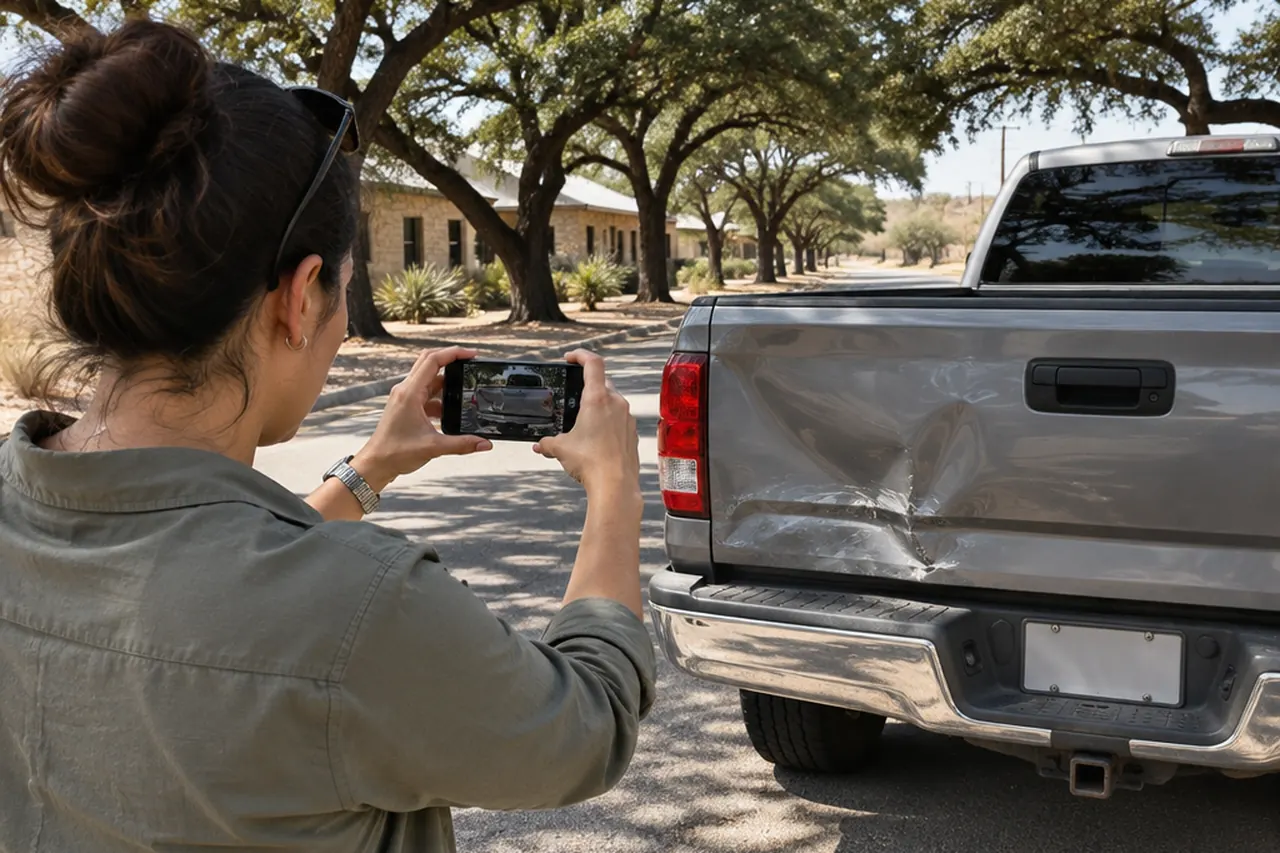
- Photos of both cars where they stopped, then close-ups of the damage.
- Wide shots that show the lane markings, arrows and signs.
- The other driver's name, phone number, license, plate and insurance card.
- Names and numbers of anyone who saw it, including employees collecting carts.
- The store name and address, and a note of where cameras are mounted.
Slow crashes can still hurt
A 10 mph bump can still snap your head forward or back if you were turned around looking over your shoulder. Neck and back strain, shoulder injuries and headaches sometimes appear the next morning. Get checked if you notice symptoms, and read about common crash injuries. Your PIP coverage may help with the first bills no matter who was at fault.
If the other driver's insurer is denying the claim or the injuries are more than you expected, an independent Texas injury attorney can review it for free. Call (325) 292-0499 or use the free case review form.
Sources
Questions people ask
Who is at fault when two cars back into each other in a parking lot?
Often both drivers share the blame, because each was expected to check that the path was clear. The exact split depends on who started moving first, where the cars were and what any video shows.
Do police write crash reports for parking lot accidents in Texas?
For minor crashes on private property with no injuries, officers often do not prepare a full state crash report. You should still call when someone is hurt or a car cannot be driven, and collect your own photos and witness information.
Keep reading
Free · about a minute
Find out if you have a case
Answer five quick questions and an independent San Angelo-area injury attorney's office will review your crash at no cost.
Prefer to talk? Call (325) 292-0499